






Long Description
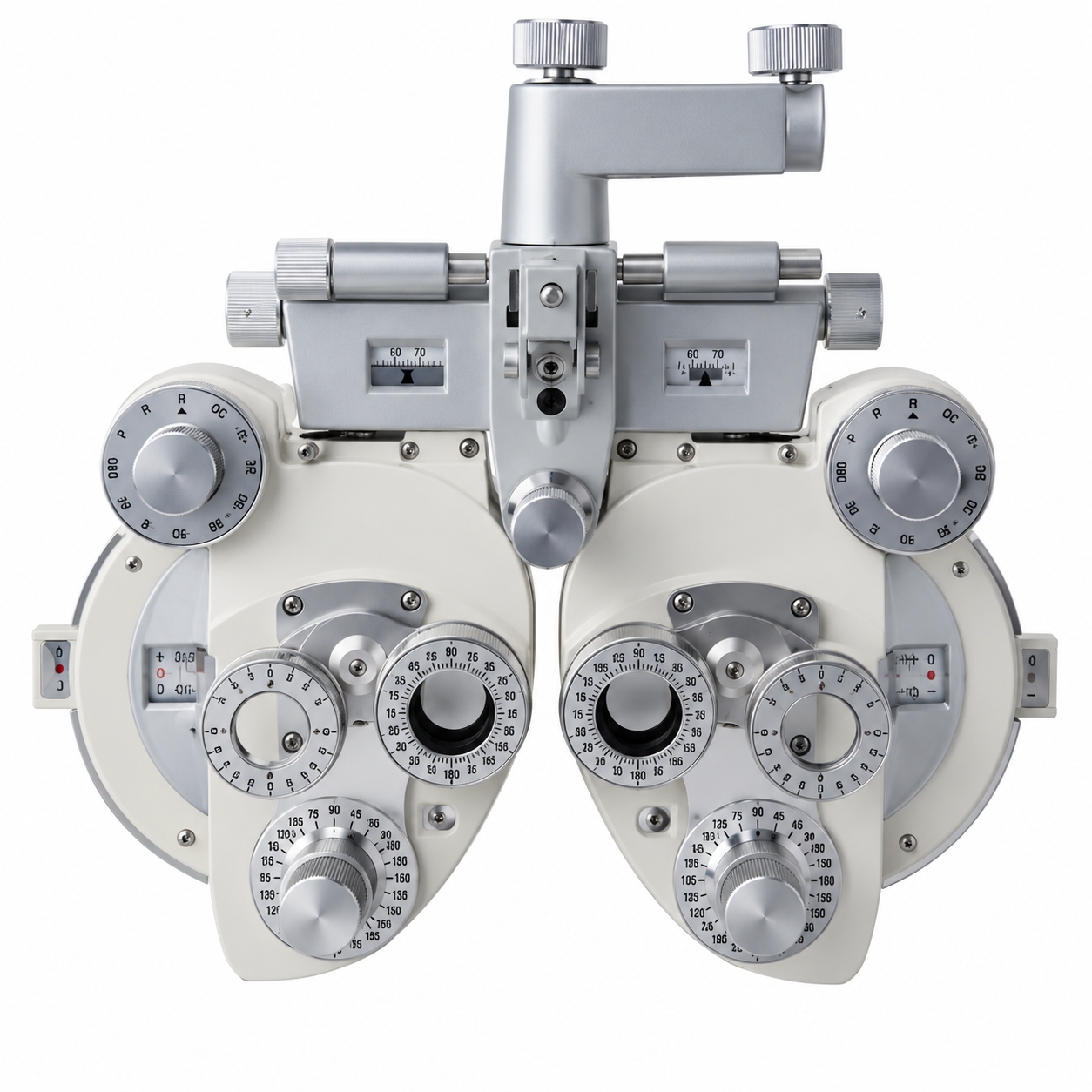
FTLENT ST100 Manual Phoropter – Professional Ophthalmic Refraction Instrument
The FTLENT ST100 Manual Phoropter is a precision optical instrument designed for professional eye examinations, subjective refraction, and vision assessment. Built for use in optometry clinics, ophthalmology practices, optical stores, and eye care centers, this manual phoropter offers comprehensive lens adjustment capabilities for determining refractive corrections.
With a wide spherical power range, adjustable cylindrical power, and precise astigmatic axis settings, the ST100 enables eye care professionals to perform routine refraction procedures efficiently. Its adjustable interpupillary distance and forehead rest help accommodate different patients during eye examinations.
Key Features and Benefits
- Wide Spherical Power Range: Supports spherical power adjustment from +16.75D to -19.00D for comprehensive refractive testing.
- Cylinder Power Adjustment: Provides cylinder power settings from 0 to -6.00D for astigmatism assessment.
- Precise Axis Adjustment: Features a 0°–180° astigmatic axis scale with 5° increments.
- Cross Cylinder Function: Includes ±0.25D cross cylinder capability for refining cylindrical correction.
- Adjustable Interpupillary Distance: Supports adjustment from 48 to 80 mm in 1 mm increments.
- Adjustable Forehead Rest: Offers 16 mm forward and backward adjustment for convenient patient positioning.
- Effective Field of View: Provides a 19 mm field of view for refraction examinations.
- Manual Control System: Allows eye care professionals to make direct adjustments during subjective refraction testing.
Technical Specifications
| Specification | Details |
|---|---|
| Brand | FTLENT |
| Model | ST100 |
| Product Type | Manual Phoropter |
| Spherical Power Range | +16.75D to -19.00D |
| Minimum Spherical Reading | 0.25D / 0.12D |
| Cylinder Power Range | 0 to -6.00D |
| Minimum Cylinder Reading | 0.25D / 0.12D |
| Astigmatic Axis Scale | 0°–180° |
| Axis Adjustment Steps | 5° |
| Cross Cylinder | ±0.25D |
| Interpupillary Adjustment | 48–80 mm |
| Interpupillary Adjustment Steps | 1 mm |
| Forehead Rest Adjustment | 16 mm Forward / Backward |
| Effective Field of View | 19 mm |
| Interpupillary Distance Convergence | 57–80 mm |
Applications
The FTLENT ST100 Manual Phoropter is suitable for various professional eye care applications, including:
- Optometry clinics and vision care centers
- Ophthalmology clinics and eye hospitals
- Optical shops and eyewear stores
- Subjective refraction examinations
- Spherical and cylindrical power assessment
- Astigmatism testing and axis refinement
- Routine vision testing and prescription determination
Why Choose the FTLENT ST100 Manual Phoropter?
The FTLENT ST100 Manual Phoropter combines essential refraction functions with a practical manual adjustment system. Its wide spherical and cylindrical measurement ranges, adjustable interpupillary distance, and cross cylinder functionality make it a versatile instrument for professional vision testing.
Designed for everyday clinical use, the ST100 provides eye care professionals with the control and flexibility needed to perform subjective refraction examinations and evaluate patients’ corrective lens requirements.